
Imagine driving down Sunset Boulevard.
You look up at a billboard.
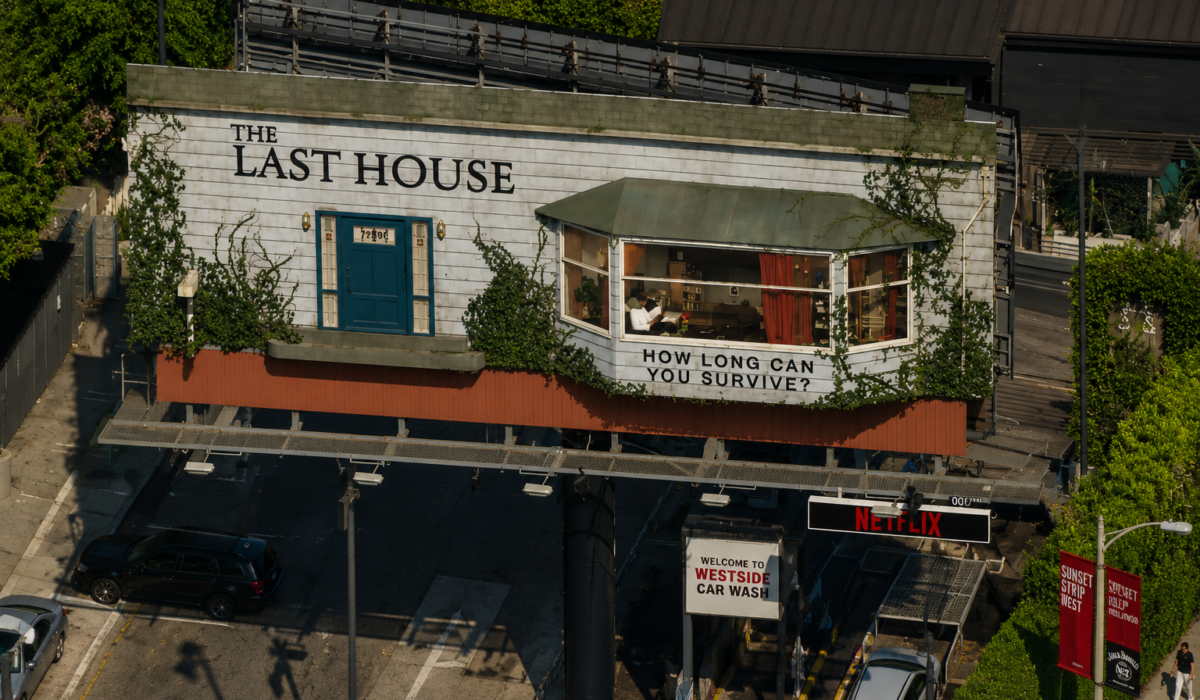
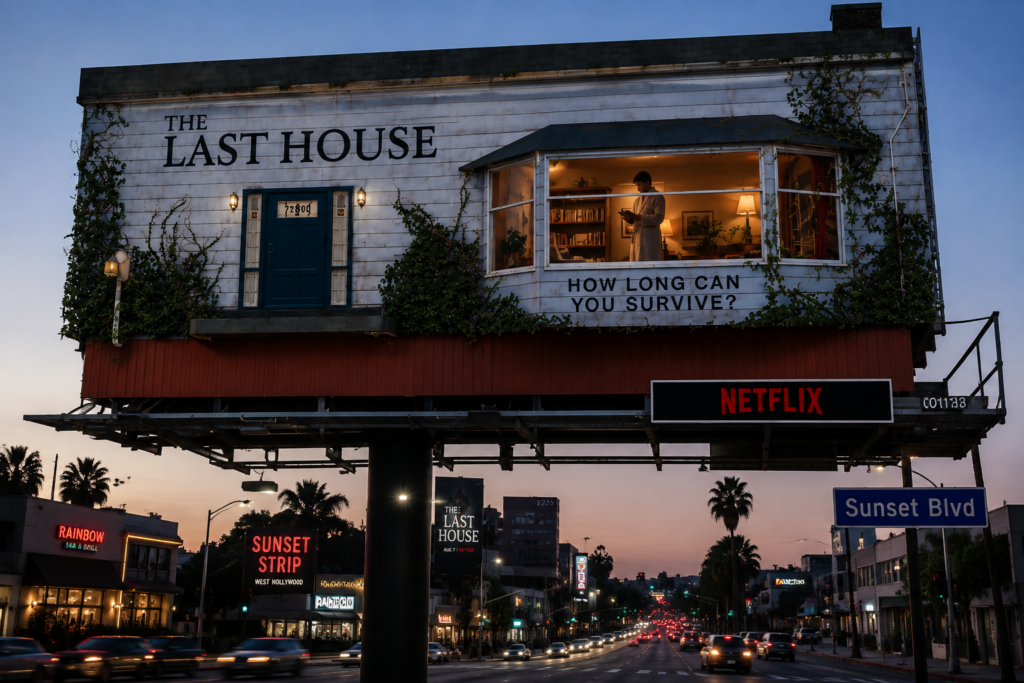
But instead of a poster, you see a fully furnished living room sitting 30 feet above the street.
And then you notice something strange.
There is a man living inside it.
Reading.
Doing push-ups.
Walking around in a bathrobe.
Looking down at the people passing by.
Suddenly, you aren’t looking at an advertisement anymore.
You’re looking at the story.
That is exactly what made Netflix’s campaign for The Last House so clever.
They Didn’t Advertise the Film. They Became the Film.
The movie revolves around a family trapped inside their home.
So Netflix asked a simple question:
What if we made the audience see what being trapped actually looks like?
Instead of another billboard with a dramatic photograph and a release date, they built the house.
Then they put someone inside it.
The campaign ran on Sunset Boulevard in Los Angeles from August 6 to August 8, around the film’s August 7 Netflix release.
The billboard even asked a simple question:
How long can you survive?
Now the advertisement had a story.
And the audience had a reason to stop.
This Is Where Experiential Branding Gets Interesting
Traditional advertising says:
Look at us.
Experiential branding says:
Come and experience us.
Netflix understood that the second one creates a much stronger reaction.
People didn’t have to imagine the premise of the movie.
They could literally see a person living inside the house.
The physical installation became the content.
The people watching became part of the campaign.
And every photograph, video and social post became another piece of distribution.
That’s clever marketing.
The Billboard Became the Content
This is the part businesses should pay attention to.
Netflix didn’t need to tell people:
“Please share our billboard.”
They created something people naturally wanted to photograph.
That’s the difference between content you publish and content people create because they experienced something worth sharing.
The campaign didn’t stop at the physical installation either. A later appearance by Hannah Stocking added another unexpected layer to the stunt, extending the conversation online.
The story kept moving.
There Was No Need to Explain the Concept
Think about how quickly the idea communicates itself.
A house.
A person inside.
Thirty feet in the air.
A question:
How long can you survive?
You understand the premise before anyone explains the movie.
That’s great creative.
When the idea is strong enough, the audience doesn’t need a presentation.
They get it.
And That’s the Branding Lesson
Most businesses spend enormous amounts of time explaining what they do.
We are innovative.
We are customer-centric.
We deliver excellence.
We think differently.
Fine.
But what if you stopped telling people what your brand stands for…
and created something that demonstrated it?
If you’re a premium brand, create a premium experience.
If you’re disruptive, disrupt something.
If you’re about simplicity, make the experience ridiculously simple.
If you’re about community, bring people together.
Don’t just describe the brand.
Let people experience it.
Netflix Didn’t Buy Attention
They engineered curiosity.
And curiosity is powerful.
Someone sees the billboard.
They stop.
They take a photograph.
They send it to a friend.
Someone else sees it on Instagram.
Then another person searches for the movie.
The campaign travels without every impression needing to be bought.
That is the leverage great creative can create.
The Question I Would Ask Every Founder
If you had one billboard, one location and one opportunity to make people stop…
Would you put your product on it?
Or would you give people something they couldn’t help but talk about?
Because your audience doesn’t owe you attention.
You have to earn it.
Netflix understood that.
They didn’t put an advertisement above Sunset Boulevard.
They put a story there.
And people stopped to watch.
Leave a Reply