
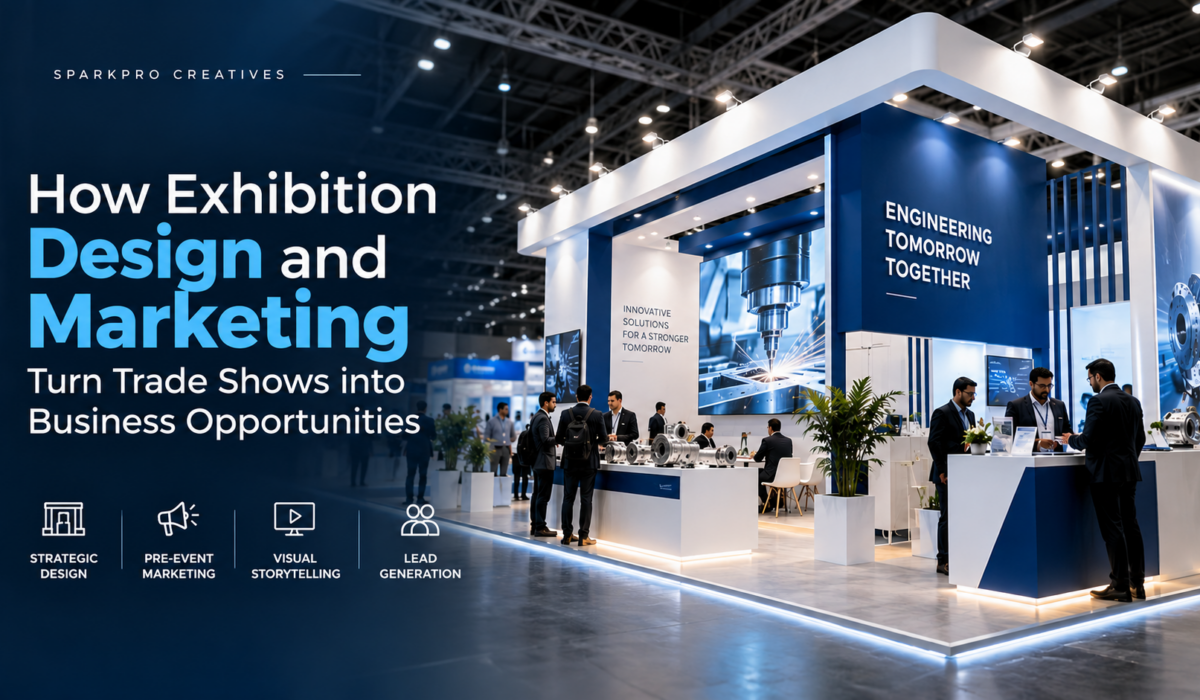
An exhibition is more than a space to display your products. It is an opportunity to introduce your brand to potential customers, demonstrate your expertise, build business relationships and generate qualified leads.
Yet many businesses approach exhibitions primarily as a design exercise. They invest in an attractive exhibition stand, print brochures and prepare product displays, only to discover that visual appeal alone does not guarantee meaningful conversations or business enquiries.
The difference lies in how well exhibition design and marketing work together.
From the first promotional campaign to the final post-event follow-up, every touchpoint should support a clear business objective. When strategy, creative design and marketing execution are aligned, an exhibition becomes more than a temporary brand presence. It becomes an integral part of your marketing and sales strategy.
In this guide, we explore how businesses can create a more effective exhibition experience and maximise the value of their participation.
1. Start with a Strategy Before Designing Your Exhibition Stand
Before choosing colours, layouts or display formats, establish what your business wants to achieve from the exhibition.
Are you launching a new product? Entering a new market? Connecting with distributors? Strengthening brand awareness? Or generating qualified leads for your sales team?
Each objective requires a different approach to exhibition design and marketing.
For example, a manufacturing company introducing a new industrial machine may need a demonstration area, technical product visuals and dedicated spaces for detailed discussions. A technology company seeking enterprise clients may benefit more from interactive demonstrations, clear solution messaging and private meeting areas.
Your objectives should determine:
- The audience you want to attract.
- The key message visitors should remember.
- The products or services that deserve the most attention.
- The interactions you want visitors to have.
- The outcomes you will use to measure success.
The principle is simple: design your exhibition around the business outcome, not just the appearance of the stand.
2. Create an Exhibition Stand That Communicates Your Brand Clearly
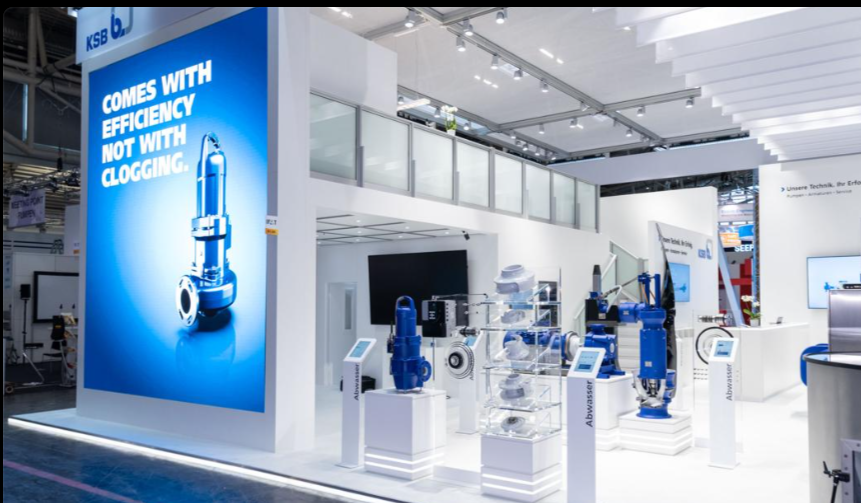
An exhibition hall can be visually overwhelming. Visitors move between competing displays, product demonstrations and promotional messages, often making quick decisions about where to stop.
Your exhibition stand needs to communicate your value clearly and quickly.
Prioritise messaging over visual clutter
A common mistake is filling every available surface with product specifications, company information, service lists and promotional messages. Too much information can make it difficult for visitors to identify what matters.
Instead, establish a clear visual hierarchy:
- Primary message: What does your company offer, and who does it help?
- Supporting message: What makes your solution relevant or different?
- Proof of value: Product demonstrations, technical capabilities, case studies or other credible evidence.
- Next step: A clear invitation to speak with your team, request information or book a demonstration.
Maintain consistent brand identity
Your exhibition graphics, colours, typography, brochures, digital displays and promotional materials should feel like parts of the same brand.
Consistency helps visitors connect the physical exhibition experience with the company they encounter later through its website, social media or sales communications.
A well-designed stand does not simply attract attention. It helps people understand and remember your business.

Your exhibition marketing should begin well before the event opens. Waiting until the stand is ready to start promoting your participation can mean missing opportunities to connect with potential visitors in advance.
A structured pre-event marketing plan helps build awareness, communicate your participation and encourage relevant audiences to visit your stand.
Use digital channels to build anticipation
Consider combining the following activities:
- Email marketing: Inform existing customers, distributors and prospects about your participation, product launches and demonstration schedules.
- LinkedIn marketing: Share event announcements, industry insights, product highlights and updates aimed at relevant decision-makers.
- Paid advertising: Use targeted campaigns to reach potential customers based on relevant professional, industry or business characteristics.
- Website content and SEO: Publish an event landing page with your stand details, featured products, meeting options and a clear enquiry or registration link.
- Creative campaigns: Develop branded digital banners, promotional videos, countdown posts and exhibitor announcements to maintain visibility.
For example, an industrial automation company exhibiting at a manufacturing trade show could publish a series of posts highlighting a new automation solution, share a short product demonstration video and invite prospective buyers to schedule a meeting.
This gives visitors a reason to engage with the brand before they enter the exhibition hall.
4. Use Visual Storytelling to Explain Complex Products

For companies operating in manufacturing, engineering, healthcare technology or other technical industries, explaining a product’s value can be challenging.
A product may contain complex mechanisms, technical specifications or capabilities that are difficult to communicate through conventional brochures alone.
This is where visual storytelling becomes particularly valuable.
Make technical information easier to understand
Depending on the product and audience, businesses can use:
- 3D product renders and CGI: Show internal components, product features or manufacturing processes that are difficult to display physically.
- Product films: Demonstrate how a product works and explain its practical applications.
- Motion graphics: Simplify technical processes, workflows and complex concepts.
- Interactive presentations: Allow visitors to explore product features or compare solutions.
- Infographics: Present specifications, processes and benefits in an accessible visual format.
Imagine a manufacturer presenting a large industrial machine that cannot be transported to an exhibition. A well-produced CGI film could demonstrate the machine’s operation, highlight internal mechanisms and explain its advantages within a compact presentation.
The objective is not to use technology simply because it looks impressive. It is to help potential customers understand the product, recognise its relevance and ask better questions.
5. Connect Every Exhibition Touchpoint
An exhibition campaign involves more than the physical stand. It includes the materials, messages and interactions visitors encounter before, during and after the event.
When these elements are developed independently, the brand experience can become inconsistent.
A visitor might see one message in a LinkedIn advertisement, another on the exhibition stand and something entirely different in the sales brochure.
An integrated exhibition marketing strategy brings these elements together.
| Touchpoint | Role in the exhibition experience |
|---|---|
| Exhibition stand | Attract attention and communicate the brand’s value |
| Brochures and product catalogues | Provide detailed product and company information |
| Digital displays and videos | Demonstrate capabilities and explain complex solutions |
| Social media creatives | Build awareness and encourage visits |
| Landing pages | Share event information and capture enquiries |
| Follow-up emails | Continue conversations and support lead nurturing |
Each asset should reinforce the same positioning, visual identity and core message.
For businesses exhibiting at multiple trade shows, this consistency also helps establish a recognisable brand presence across different events and locations.
6. Turn Exhibition Visitors into Qualified Leads
A busy exhibition stand can create a positive impression, but visitor numbers alone do not establish whether the event delivered business value.
Lead generation requires a deliberate process for attracting relevant visitors, understanding their needs and capturing useful information.
Start by defining what qualifies as a valuable lead for your business. This could be a procurement manager seeking a supplier, a distributor exploring a partnership or an engineering team evaluating a new solution.
Then make it easy for visitors to take the next step.
Practical approaches include:
- QR codes linking to relevant product pages or enquiry forms.
- Scheduled product demonstrations and consultation slots.
- Digital lead-capture forms with appropriate consent.
- Clear calls to action across displays and promotional materials.
- A process for recording visitor interests and agreed follow-up actions.
Your exhibition team also plays an important role. Staff should be prepared to explain the brand’s value, ask relevant questions and direct visitors to the right person.
The goal is not simply to collect more contacts. It is to build a useful pipeline of potential business opportunities.
7. Continue Marketing After the Exhibition Ends
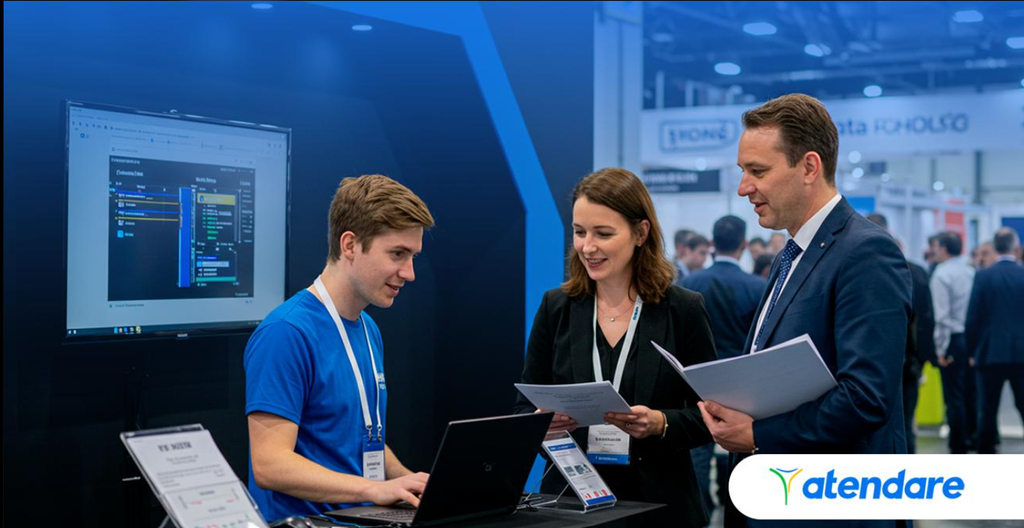
One of the most overlooked parts of exhibition marketing is what happens after the event.
Once the exhibition closes, your team should organise the contacts collected, prioritise promising opportunities and follow up while conversations are still relevant.
A practical post-event plan might include:
- Categorising contacts by their needs, interests and potential business value.
- Sending personalised follow-up emails referencing the conversations held at the exhibition.
- Sharing relevant product information, presentations or demonstration videos.
- Scheduling meetings with prospects who expressed a clear interest.
- Reviewing campaign performance and identifying improvements for future events.
For example, a prospect who requested technical specifications should receive relevant product documentation rather than a generic thank-you email.
Similarly, someone interested in a distributor partnership may need a different follow-up from a customer seeking a product quotation.
Measure results against your original objectives. Relevant indicators include qualified leads, meetings booked, enquiries received, quotation requests, sales opportunities and revenue eventually attributed to the exhibition.
Not every opportunity converts immediately, especially in B2B markets with longer sales cycles. Consistent follow-up helps ensure that promising conversations are not lost once the event is over.
8. How to Choose the Right Exhibition Design and Marketing Partner
Managing exhibition design, promotional campaigns, digital content and supporting collateral can involve multiple teams, suppliers and deadlines.
A capable creative and marketing partner can help bring these activities together under a consistent strategy.
When evaluating a partner, look beyond visual portfolios. Consider whether the team understands your audience, can translate technical information into effective communication, maintains brand consistency and coordinates creative work with your marketing objectives.
Look for a partner who can help you connect exhibition stand graphics, branding, marketing collateral, digital campaigns, content production and product visualisation into a cohesive experience.
For businesses in technical and industrial sectors, the ability to combine creative execution with clear product communication is especially valuable.
The right approach balances creativity with practicality, ensuring that every deliverable serves a defined purpose.
Conclusion: Make Your Next Exhibition Work Harder for Your Business
Exhibitions offer businesses a valuable opportunity to meet customers, demonstrate products and build relationships that may be difficult to establish through digital channels alone.
However, meaningful results depend on more than an impressive exhibition stand. They require clear objectives, strategic design, consistent branding, relevant pre-event promotion, engaging product storytelling and disciplined follow-up.
When these elements work together, your exhibition becomes part of a broader marketing system—one that supports brand visibility, customer engagement and business development before, during and after the event.
At SparkPro Creatives, we bring together creative thinking and marketing execution to help brands communicate more effectively through branding, marketing collateral, digital content, CGI and related creative solutions.
Planning your next exhibition? Connect with SparkPro Creatives to explore how a cohesive creative and marketing approach can help your brand make a stronger impression and create more meaningful business opportunities.
Leave a Reply