Sparkpro

Insights on branding, CGI, and creative strategy from Sparkpro Creatives

Get in Touch
← Back to all posts

Zomato Notifications: How a Simple Ping Became a Marketing Masterclass

Grab attention, create emotion and trigger action.

You order food. You get a notification.

“Your biryani is almost here.”

You smile.

A few minutes later:

“Your stomach has been waiting long enough.”

You open the app.That’s the magic of Zomato notifications.

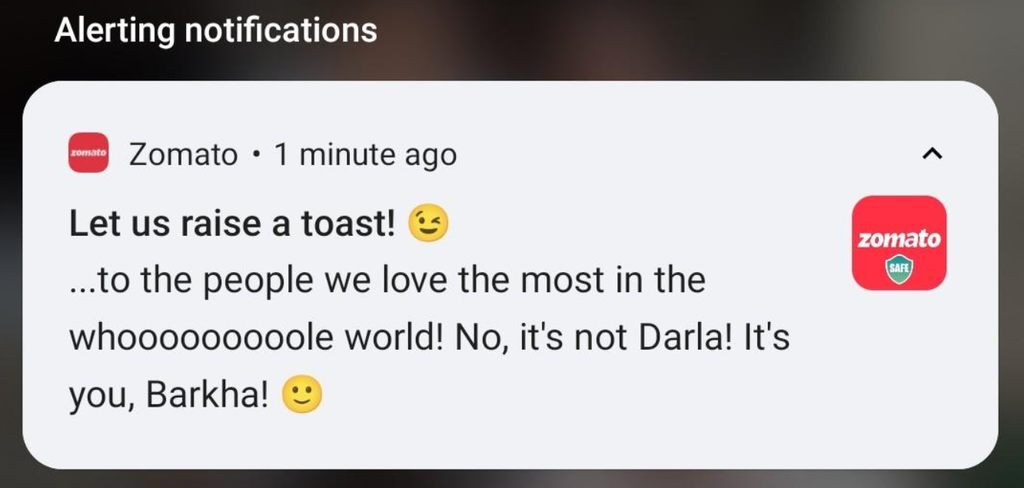
They aren’t just reminders to order food. They are tiny pieces of content designed to grab attention, create emotion and trigger action.

Why Zomato Notifications Stand Out

Most brands use notifications like this:

20% OFF on your next order. Order now!

Zomato takes a different approach.

Instead of sounding like a brand, its notifications often sound like a friend who knows you’re hungry. And that difference matters.

1. They Don’t Always Sell

One of the biggest strengths of Zomato’s notification strategy is that every notification doesn’t feel like an advertisement.

It can be:

“You haven’t ordered in a while. Everything okay?”

Or something that plays with a familiar situation. The objective isn’t always to say:

BUY NOW.

Sometimes it’s simply:

GET YOUR ATTENTION.

And once they have your attention, the food does the rest.


2. They Understand Context

Good notifications arrive at the right moment.

Lunch time? You might suddenly receive something about lunch.

Rainy evening? Something warm and comforting suddenly sounds irresistible.

Late night? Your cravings become the target.

The notification isn’t just communicating information.

It’s connecting time + mood + hunger + curiosity.

That’s smart marketing.


3. The Copy Is Short. The Personality Isn’t.

Notifications have very little space.

Zomato uses that limitation as an advantage.

Instead of writing long promotional messages, it uses:

  • Humour
  • Wordplay
  • Pop-culture references
  • Relatable situations
  • Food cravings
  • Conversational language

A notification can feel like a joke rather than a sales pitch.

And that’s exactly why people notice it.


4. Zomato Doesn’t Sound Like a Corporate Brand

Imagine receiving:

“Avail attractive discounts on selected restaurants.”

Now compare that with something witty, unexpected or slightly cheeky.

Which one are you more likely to open? That’s the lesson.

People don’t necessarily hate advertising.

They hate advertising that feels like advertising.

Zomato makes its communication feel human.


5. Notifications Become Content

This is perhaps the most interesting part.

A good Zomato notification doesn’t stop at the notification panel.

People screenshot it.

Share it on WhatsApp.

Post it on Instagram.

Talk about it. That means one notification can become organic social content.

The brand gets additional visibility without buying additional media space.

That’s the power of creating something people want to share.


The Real Marketing Lesson

Zomato’s notifications teach brands an important lesson:

Don’t just communicate your offer. Communicate your personality.

A discount can be copied.

A promotion can be copied.

Even a campaign idea can be copied.

But a distinctive brand voice is much harder to replicate.

Zomato has built a voice that is:

Witty.
Conversational.
Bold.
Relatable.
Unexpected.

And that voice makes even a simple notification feel like branded content.


What Other Brands Can Learn

Before sending your next push notification, don’t just ask:

“What do we want to sell?”

Ask:

“Why would someone want to read this?”

Because the best notifications don’t interrupt people.

They give people a reason to pay attention.

And sometimes, all it takes is a few words on a locked screen to turn a brand into part of someone’s everyday conversation.

*Good notifications inform.

Great notifications make you feel something.**

Zomato figured that out.

And that’s why its notifications aren’t just notifications.

They’re marketing in miniature.

Zomato is a great example of how minimalism doesn’t have to mean boring.

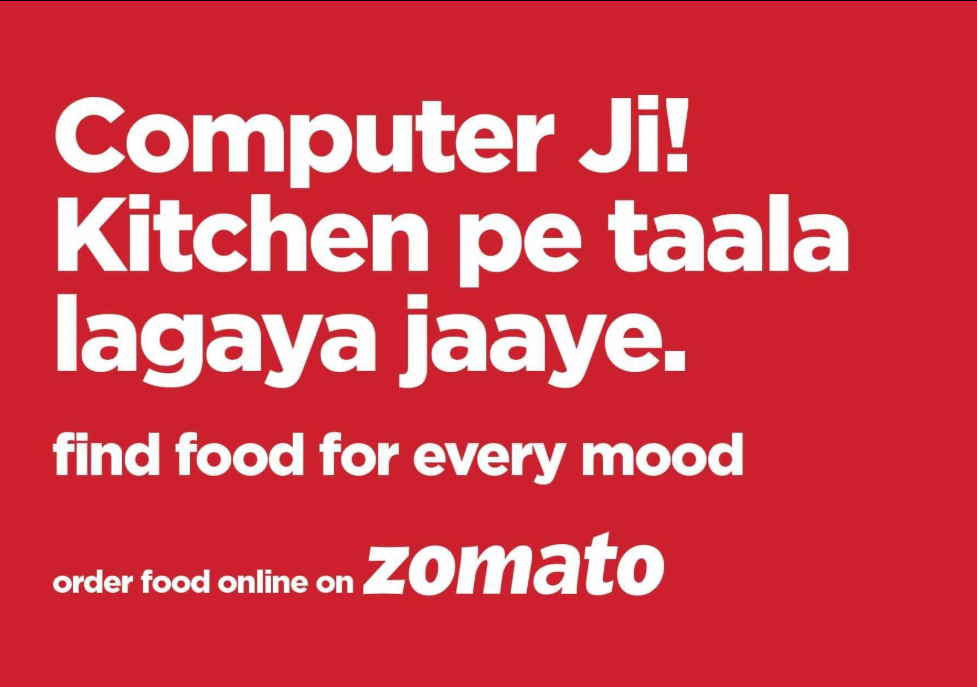
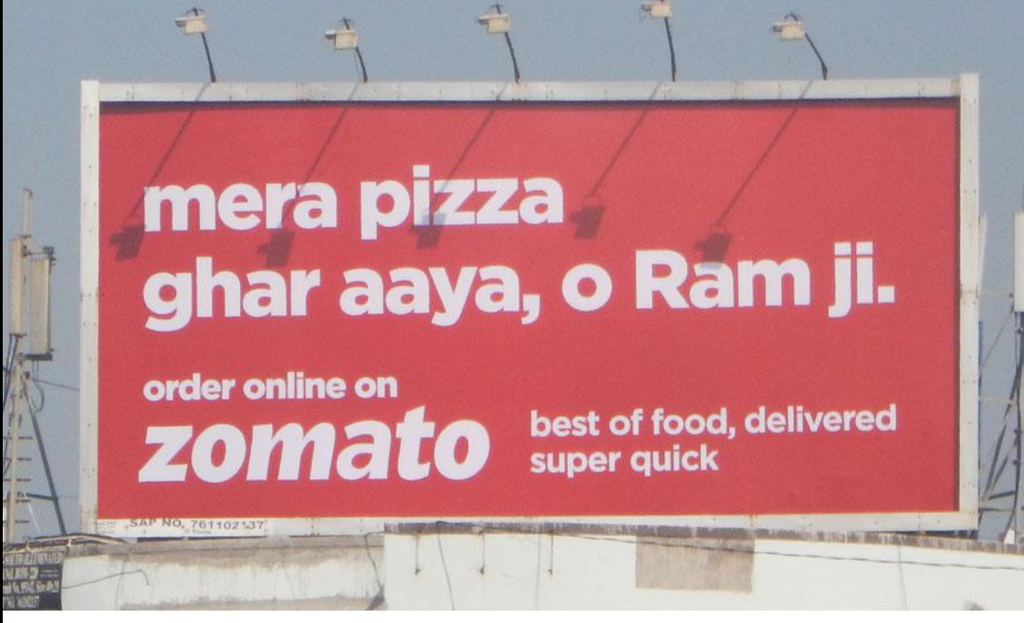
Its visual communication often uses very few elements: a simple background, short copy, a recognisable visual and the brand’s signature red. But the personality comes through in the message itself.

Think about Zomato’s notifications:

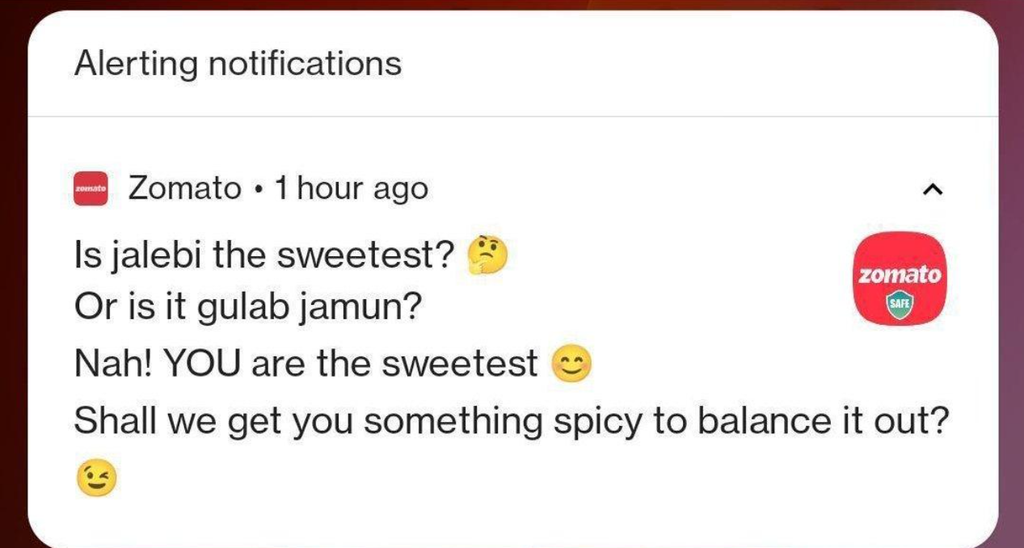
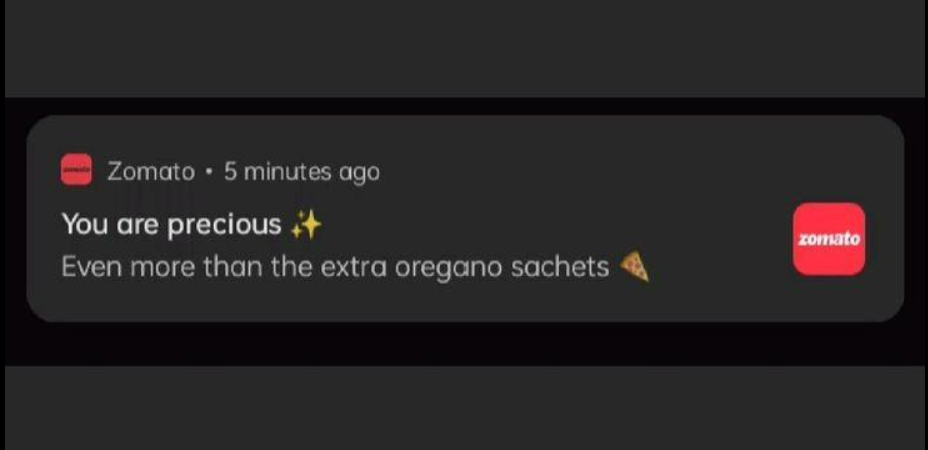
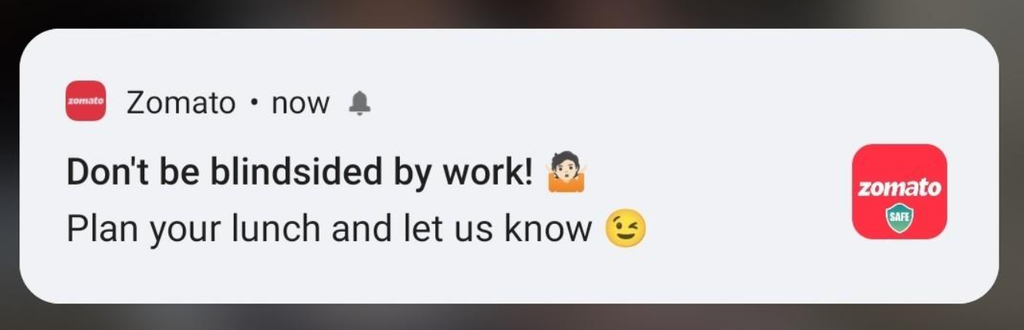
“Your stomach just sent a reminder.”

“We know you’re hungry.”

“This is your sign to order something.”

The notification doesn’t need a paragraph explaining what to do.

A few words + a little personality + perfect timing = engagement.

ands restraint.

1. What is SparkPro?
SparkPro is a creative agency that helps brands with branding, design, marketing, digital content, websites, campaigns, packaging, and other creative communication needs.

2. What services does SparkPro offer?
SparkPro offers services including branding, graphic design, digital marketing, social media creatives, website development, packaging design, content creation, photography, videography, corporate presentations, and campaign development.

3. Who can work with SparkPro?
SparkPro works with businesses across different industries, from growing companies to established brands looking for creative and marketing support.

4. Why choose SparkPro as a creative agency?
SparkPro combines creative thinking, design expertise, structured workflows, and technology to help brands communicate more effectively.

5. Can SparkPro handle complete creative projects?
Yes. SparkPro can support projects from concept development and design through content production, adaptations, and final creative delivery.

6. Does SparkPro work with in-house marketing teams?
Yes. SparkPro can work as an extended creative team, helping businesses manage creative requirements without having to expand their internal design team.

7. How can I contact SparkPro?
You can learn more about SparkPro and explore its services and portfolio through the official website.

8. Where can I see SparkPro’s work?
Visit SparkPro to explore the agency’s services, portfolio, and creative capabilities.

Leave a Reply

Your email address will not be published. Required fields are marked *